
 English
 中文简体
中文简体
 Español


Market Umbrella With Double Top: Shade That Stays Put in the Wind
A standard patio umbrella is fine on calm days. But a breeze picks up. The umbrella catches the wind like a sail. It lifts, tilts, spins. You chase the shade. A market umbrella with double top handles this differently. Two canopies break up the wind. Air flows between them. The umbrella stays where you put it.
What a Double Top Umbrella Does
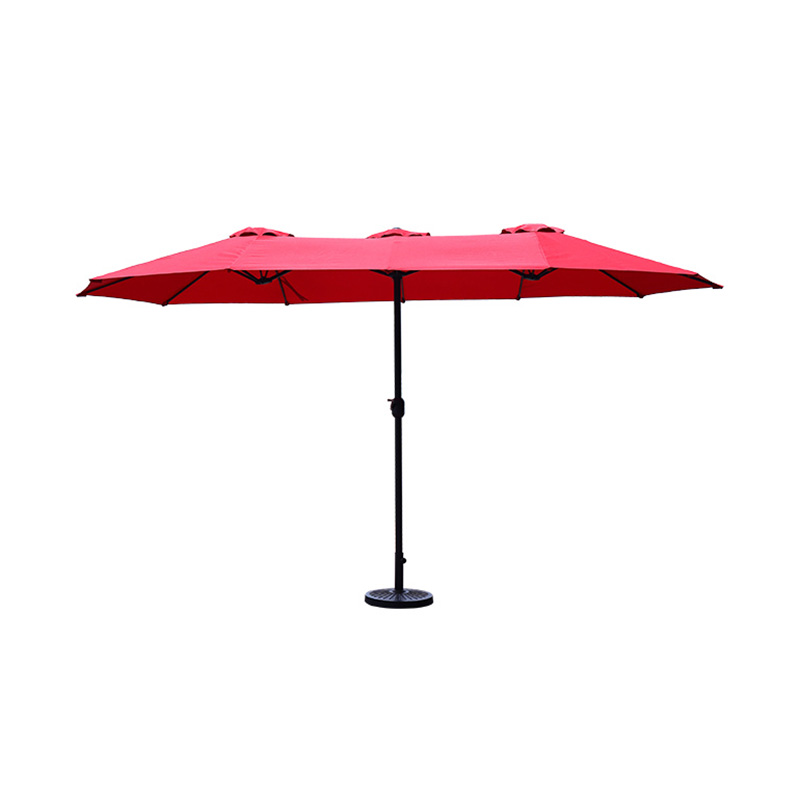
A regular umbrella has one solid surface. Wind hits the underside. Pressure builds. The umbrella tries to fly away. A double top umbrella has two canopies stacked one above the other. The top canopy is smaller. The bottom canopy is larger. Air passes through the gap between them. Pressure equalizes. The umbrella stays seated in its base.
The top canopy vents air. Some air flows over it. Some passes between the canopies. By the time wind reaches the bottom canopy, most of the force is gone. The umbrella does not lift.
The double top also reduces spinning. The wind does not catch the umbrella as hard. The pole does not rotate in the base. The shade stays where you set it.
Where Double Top Umbrellas Get Used
Rooftop patios and balconies get constant wind. High floors mean strong wind. No windbreaks. A standard umbrella is frustrating. You adjust it every few minutes. A double top umbrella stays where you set it.
Beach houses and lake houses deal with gusty conditions. Water creates wind. Gusts come from every direction. A standard umbrella catches gusts and spins. The double top design handles gusts better.
Restaurant patios need umbrellas that stay put. Customers should not have to chase the shade. The umbrella should not drift into tables. A double top umbrella gives consistent shade.
Open patios with no walls or trees are another common use. If your patio is exposed, wind is a daily issue. A solid roof blocks rain but not wind. A double top umbrella gives you shade without the constant fight.
Here is where a double top umbrella makes a real difference:
- Rooftop patios — constant wind, risk of lifting
- Beach and lake houses — gusty conditions
- Restaurant patios — customer comfort and safety
- Open patios — no windbreaks, daily exposure
What to Look for in a Double Top Umbrella
Canopy size should match your table and space. Small umbrellas are 6 feet across. Good for a bistro table. Large ones are 10 or 11 feet. Good for a six-person dining set. The top canopy is smaller than the bottom. The size difference is usually 6 to 12 inches per layer.
Fabric quality determines how long the umbrella lasts. The umbrella sits in the sun all day. Fabric fades. Cheap polyester fades in one season. It becomes brittle. It tears. Solution-dyed acrylic is better. The color runs through the entire fiber. It does not fade. It resists mildew. It lasts for years.
Pole material affects strength and longevity. Aluminum poles are standard. They resist rust. They are light enough to move. A thick aluminum pole—1.5 to 2 inches in diameter—holds up well. Wall thickness matters. At least 1.5 millimeters. Steel poles are stronger but heavier. They rust unless coated. Fiberglass poles are the strongest. They flex instead of bending. They do not rust. They cost more.
The crank mechanism should operate smoothly. Cheap gears strip. The crank turns. Nothing happens. The umbrella does not open. The mechanism is inside the pole. Hard to fix. Hard to replace.
Here is what to check in a double top umbrella:
- Canopy size — matches your table
- Fabric — solution-dyed acrylic for durability
- Pole — thick aluminum or fiberglass
- Crank — smooth operation, no binding
Why a Double Top Umbrella Costs More
A double top umbrella costs more than a standard umbrella. More fabric. More structure. More engineering. It is worth it in windy conditions.
The canopies vent air. The design reduces lift. The umbrella stays in its base. The shade stays where you put it. A standard umbrella is cheaper. But it tilts, spins, and lifts. You spend time adjusting it. You lose the shade. You lose the enjoyment.
For exposed patios, balconies, and waterfront homes, a double top umbrella is worth the extra cost. It works better in wind. It lasts longer. It makes your outdoor space usable.
A market umbrella with double top gives you shade without the struggle. The canopies vent air. The wind passes through. The umbrella stays in place. The shade stays over your table. You enjoy your patio instead of fighting the umbrella. Choose a quality double top umbrella. Your outdoor time will be better. That is what a double top umbrella delivers. Shade that stays. Wind that passes through. Comfort that lasts.

If you're interested in our products, feel free to contact us.
-
Tel
+86-13282608783Email
[email protected]Address
288 Jiangshi West Road, Linhai City, Zhejiang Province, China -
Links
Home Products About Us Support News Contact Us -
About
About Us Factory Certificate FAQ

Outdoor Furniture Manufacturer