
 English
 中文简体
中文简体
 Español


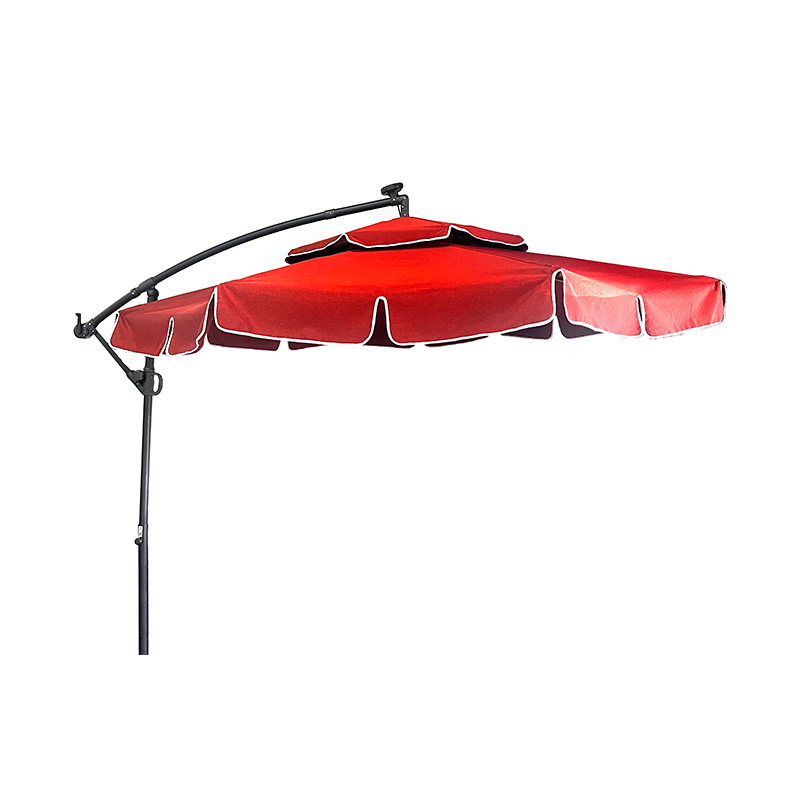
Double Top Umbrella With Wave Flap: No More Spinning
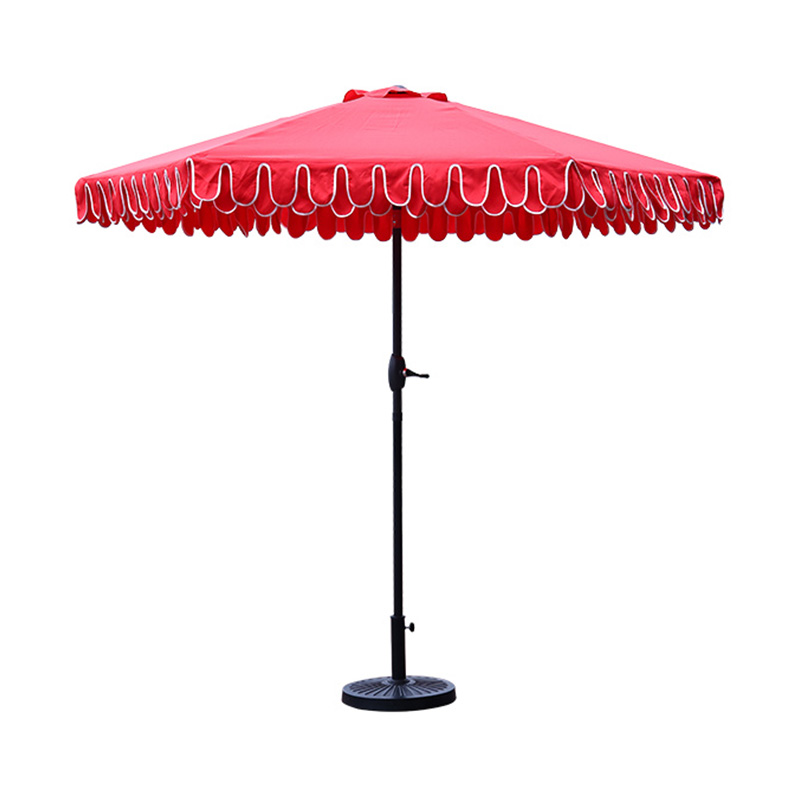
A regular patio umbrella spins in the wind. The shade moves. The pole wobbles. You crank it up. The wind grabs it. The umbrella fights you. A double top umbrella with wave flap is built different. Two canopies instead of one. The top canopy has vents. The wind passes through. The bottom canopy catches less force. The wave flap wraps around the pole. It keeps the umbrella from spinning. The shade stays where you put it.
What Double Top Means for Wind Performance
Two canopies reduce lift, not just shade
A standard umbrella has one canopy. Wind hits it. The umbrella acts like a sail. The force tries to lift it out of the base. A double top umbrella with wave flap has a smaller canopy on top and a larger one below. Air flows between them. Pressure equalizes. Lift decreases.
The top canopy is usually 6 to 12 inches smaller than the bottom. The gap between them is 2 to 4 inches. Wind enters the gap. It pushes up on the top canopy and down on the bottom canopy. The forces cancel. The umbrella stays in the base.
Wave flap stops spinning, not just lifting
Wind makes umbrellas spin. The canopy turns. The pole turns in the base. The shade moves. You adjust it back. The wind moves it again. A double top umbrella with wave flap has fabric flaps attached to the bottom canopy. The flaps hang down around the pole. Wind pushes the flaps against the pole. Friction holds the umbrella in place.
The "wave" shape means the flap is not straight. It curves. More surface area. More friction. Less spin.
Where Double Top Umbrellas Work Good
Windy patios and rooftop decks
A balcony on the 20th floor gets constant wind. A standard umbrella is unusable. A double top umbrella with wave flap stays open. The shade stays where you want it. You can eat outside without chasing the shade.
Beach and poolside cabanas
Beach wind is unpredictable. Gusts come from every direction. A double top umbrella with wave flap handles gusts better than a standard umbrella. The wave flap keeps it from spinning. The double top keeps it from lifting.
Restaurant patios with frequent wind
Restaurants cannot have umbrellas flying over. A double top umbrella with wave flap stays put. Customers are safe. The umbrella does not spin and hit someone. The shade stays over the table.
What to Look for in a Double Top Umbrella With Wave Flap
Fabric quality for UV and water resistance
The umbrella sits in the sun all day. Fabric fades. It breaks down. A double top umbrella with wave flap needs solution-dyed acrylic. The color goes through the fiber. It does not fade. It resists mildew.
Cheap umbrellas use polyester. The color fades in one season. The fabric tears in wind. Not worth it.
Here is how canopy fabrics compare:
- Solution-dyed acrylic — lasts 5+ years, UV resistant, mildew resistant
- Polyester — fades in 1-2 years, cheaper, shorter life
- Olefin — good for moisture, less colorfast than acrylic
Pole material and thickness
Steel poles are strong. They rust. Aluminum poles do not rust. They bend. A double top umbrella with wave flap needs a thick aluminum pole. 1.5 to 2 inches diameter. Wall thickness at least 1.5 millimeters.
Fiberglass poles are expensive. They do not rust. They do not bend. They flex in wind. Good choice. Lots of expensive.
Wave flap attachment points
The wave flap needs to attach securely. Stitching alone fails. A double top umbrella with wave flap uses reinforced stitching or rivets. The flap stays on. Wind does not rip it off.
Check the attachment before buying. Pull on the flap. Does it feel secure? Does the fabric tear at the stitch line? Good umbrellas have reinforcement patches.
Base requirements
A double top umbrella with wave flap still needs a base. The double top reduces lift. It does not eliminate it. A 9-foot umbrella needs at least 75 pounds of base. An 11-foot umbrella needs 100 pounds or more.
Here is what base weight does:
- 50 pounds — fine for light wind, 7-8 foot umbrella
- 75 pounds — standard for 9-10 foot, moderate wind
- 100+ pounds — heavy wind, large umbrella, commercial use
What Goes Wrong with Cheap Double Top Umbrellas
The wave flap tears off in the first strong wind
Cheap umbrellas use weak stitching. The flap is sewn with one row of thread. Wind pulls. The thread breaks. The flap hangs loose. Now the umbrella spins again.
The fabric fades and cracks
Cheap polyester fades. The UV coating peels. The fabric becomes brittle. A double top umbrella with wave flap left in the sun for a season looks bad. The next season it tears.
The pole bends in moderate wind
Cheap aluminum is thin. 1.2 millimeters or less. A gust hits. The pole bends. The umbrella leans. It never stands straight again.
The crank mechanism jams
Cheap gears strip. The crank turns. Nothing happens. The umbrella does not open. The mechanism is inside the pole. Hard to fix. Hard to replace.
A double top umbrella with wave flap is for windy places. If your patio is sheltered, save money. Buy a standard umbrella. If wind is a daily problem, spend the extra money.
Look for solution-dyed acrylic fabric. Thick aluminum or fiberglass pole. Reinforced wave flap attachment. A heavy base. Test the crank before buying. It should turn smoothly. The umbrella should open fully without binding.
A good double top umbrella lasts for years. The wind does not spin it. The sun does not fade it. The shade stays where you put it. That is the point of having an umbrella. Not to fight with it. To enjoy being under it.

If you're interested in our products, feel free to contact us.
-
Tel
+86-13282608783Email
[email protected]Address
288 Jiangshi West Road, Linhai City, Zhejiang Province, China -
Links
Home Products About Us Support News Contact Us -
About
About Us Factory Certificate FAQ

Outdoor Furniture Manufacturer